I had been thinking lately about something I could do for the many individuals I came across in my volunteer work that were sick. After my light bulb moment delivered the thought ‘care package’ it was off to the internet to borrow others ideas. This article happens to have some terrific ones.
Since I’m looking for more generalized ideas, I’m sticking with the following items:
heating pads
brain games (inexpensive and readily available at your local dollar store)
mug filled with green tea and honey (don’t forget a little brewing guide as I, a long time green tea drinker, recently discovered I had been over-brewing it)
a journal
some reading material
a handwritten message, likely inside of a greeting card
Of course for friends and family members I know more intimately some of the other suggestions in the article would be easier to use.
What things do you choose to give or would like to receive when you’re not feeling well?
It’s been two weeks (and a few days – sorry about that) so it’s time for our next money mistake to avoid. Last time we talked about not saving from as early as possible. Hopefully if you weren’t saving before you read the last post you are now.
Mistake #2: Locking away all your savings.
‘But Ms. ME didn’t you tell me last week to open a Roth IRA? Once the money is in there I can’t touch it until I’m retirement age.’
Yes, yes I did tell you that last week. But I did not tell you to put ALL of your savings in there. Let me be clear and restate this comment from the last post.
“Once you have a couple of hundred dollars in that savings account it’s a great idea to go ahead and open a Roth IRA at an early age.”
Notice I said “a couple of hundred dollars” and then I reference opening an IRA with only $100 of those dollars. The remaining funds should stay in your savings account. You never want to lock away ALL of your savings in any account that restricts you from accessing it. In the context of the last post, we were encouraging parents to start savings accounts & then IRAs for their children. From that point on split your saving for your children between the two accounts. If you desire to earn a higher interest rate, using some of the funds from the savings account to open a certificate of deposit can be a valuable option.
Once your children become independent, these initial savings accounts can serve as their emergency funds for when life happens. That way instead of calling mom & dad for help immediately, they can first turn to the help mom & dad have already given them by getting their savings started early.
For everyone who started saving since the last post, the basic advice is don’t put it all away in an inaccessible savings instrument just for the higher interest rate. The trade-off isn’t worth it if you end up having to resort to using credit in an emergency situation.
About a week ago a friend of mine mentioned having a gym membership but needing some help with what routines to do. The cost of a personal trainer was prohibitive. Immediately my favorite fitness app, Fitocracy came to mind and a post I reblogged last year. The portion of the post can be found below along with the link to the full post. The individual exercises that you can pick are mentioned. However what wasn’t mentioned in the post (possibly because this feature was added later) is that Fitocracy has routines that you can pick from based on your goals. This is what makes this app tops in my opinion.
FITOCRACY
I’ve been using this website for a while now and it acts as my main source of motivation. At the base of Fitocracy is a system of tracking your workouts (through their free web application, or the iOS and Android apps), getting points for each of your exercises, and then leveling up when you reach a certain amount of points. This is actually a surprisingly great way to stay motivated as you aim to keep advancing yourself each time you exercise, you end up getting addicted to earning leveling up meaning you have another reason to get out there and keep going.
The motivation gained just by being able to level up just by exercising is enough of a reason for you to start using Fitocracy, but another great reason is the awesome and helpful community. Have a question? Need to get someone to check on your technique? Someone in the Fitocracy community will be willing to help you get things right, and they’re great at motivating you too.
If you’re over the age of 18 it’s likely you’ve made some mistakes with your money. Even I have made some because let’s face it no one is perfect. So we’re starting a new series on the money mistakes you want to avoid if you haven’t made them yet.
Mistake #1: Not saving from an early age.
First let me state this mistake is not always our own to claim. I strongly believe that anyone who has a baby should make their first outing into the general public include a trip to your local bank or credit union to open at least a savings account for the child. So if you didn’t have one as a child, this is one time you can rightfully say it is your parents’ fault.
Now I understand some parents become parents unexpectedly and that $25 you need to open an account needs to spent on diapers, formula and all the other necessary baby paraphernalia. That’s when taking it old school and getting a piggy bank to save that spare change will help get you there.
Once you have the account opened for your child, create a regular savings plan. Determine what amount you can reasonably deposit into the account on a regular basis. Then stick to it! The great part about starting this savings plan for your child is that they have a longer amount of time for the money you deposit to grow, no matter how small the amount. I recently had the opportunity to help a business partner grasp compound interest by stating, ‘You’re earning money (interest) on free money (interest)’.
Listen to the genius..
Once you’ve started your child off saving early, it’s important that you include them in the process when they are ready. There’s no set age for this as children all mature differently, but it can be as simple as teaching them what change in your local currency looks like so that when they spot some carelessly discarded on the ground they know to pick it up and put it in that piggy bank you got them earlier. From there you can teach them how to count it, show them how to deposit it in their account, and start helping them to understand how to read their bank statements. So far no complicated math involved.
Oh but there will be some…
But it’s simple Math, something you can use for your own savings no matter when you started and that you can teach your children once they learn how to divide. To get a general idea of how long it would take to double your money simply from interest alone, divide 72 but whatever interest rate their account earns. For example, a savings account earning 1% (one of the highest rates we could find for a savings account btw) would double in 72 years [72/1=72]. Just one more reason it’s important to start saving early.
Of course since you’re adding money to the account it won’t take quite as long to see your money double. But let’s say you want to earn more than 1%. Up until this point we’ve only been looking at regular savings accounts and we haven’t mentioned a specific savings goal. Let’s talk saving for retirement now. Once you have a couple of hundred dollars in that savings account it’s a great idea to go ahead and open a Roth IRA at an early age. That concept of compound interest applies to those accounts also, they can be opened for children, and require relatively low initial deposits, some as low as $100. There are other benefits as listed in this Investopedia article. Talk to your financial professional for more details.
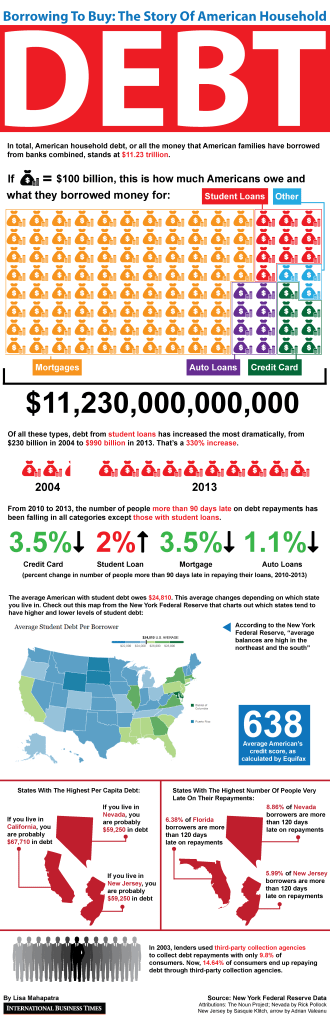
Debt: It’s something a lot of households in America have but few like to admit or talk about. But that doesn’t make it go away. Here are some useful tips to get out of debt.
First, try to pay more than the minimum monthly amount required on each bill, credit card, or other commitment. Paying only the minimum will result in you spending exorbitant amounts in interest.
Second, concentrate initially on paying the debt that carries the highest interest. Albert Einstein famously said,
“Compound interest is the eighth wonder of the world. He who understands it, earns it … he who doesn’t … pays it.”
Here’s why you want to pay off the highest interest rate first. Every balance that you are charged interest on doubles every so often and your creditor knows this. It’s a little thing called the Rule of 72. Divide 72 by your interest rate and that’s how long it takes for your balance to double. So if you have a credit card with a 29% rate and one with a 14% interest rate, you want to pay off the one that doubles in about 2 years (72 divided by 29) before you worry too much about the one that doubles in 5 years (72 divided by 14).
Third, curb your spending habits. This is especially important but often the hardest thing to do. Check back next week for useful tips on how to manage this last but very important part of getting and staying out of debt.




![By gringer on Open Clip Art Library. (Created by 'gringer' on Open Clip Art Library.) [Public domain], via Wikimedia Commons](http://upload.wikimedia.org/wikipedia/commons/b/b5/Open_Clip_Art_Library_Piggy_Bank.svg)


 ECV Talks