
Category Archives: Internal

mental, emotional and other internal aspects that affect your overall well-being

WHAT YOU SEE IS WHAT YOU GET: THE POWER OF VISUALIZATION

Imagination is underrated.

We live in a world of dollars and cents, ones and zeros, and cold, hard facts. Dreams and hopes are great, but results will always be our number one priority.

But what if your imagination mattered?

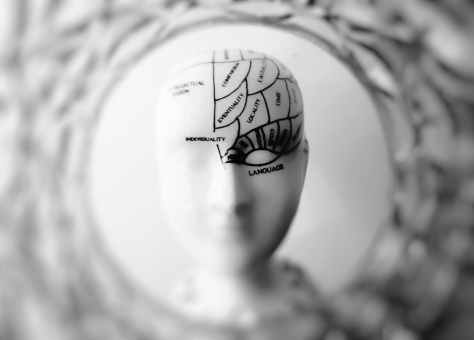
What if your mind’s eye actually held the key to success? There’s strong evidence that actually visualizing certain outcomes can reduce stress and empower you to achieve your goals and dreams. It might sound like voodoo, but it’s actually not! Here’s how it works.

Mind and Muscle
Your brain is connected to your body. Your brain registers things that happen to your arms and legs and ears and lets you know if they’re good or bad. A soft blanket? Good! Stubbing your toe? Bad!

But the connection between your brain and body goes both ways. Imagining an action in your mind can actually improve your performance in real life. There’s plenty of anecdotal evidence for this; legends like Arnold Schwarzenegger and Muhammad Ali were big believers in imagining specific outcomes.(1&2) But there’s also research to back it up. People who imagined exercising certain muscles gained almost as much strength as people who physically exercised!(3)

Visualization can also reduce stress. Studies have found that novice surgeons and police officers who receive imagery training feel less stress and have less objective stress.(4)

Some visualization tips
Imagining yourself on a generic island paradise in 15 years is just daydreaming. The key to effective visualization is specificity. Be as precise as possible. Break down how you’ll achieve your goal or throw that game-winning pass into as many tiny movements as possible, and imagine how you’ll execute each one. Incorporate your senses; what will you smell and hear when you finally achieve that goal?

Verbal affirmations can also help with this visualization process. Take a page from Muhammad Ali, and tell yourself that you’re the greatest every morning before you get breakfast! Even better, say your goal out loud before you go to bed or eat lunch. Writing up a mission statement that you read daily or making a vision board of images that inspire you are also ways to boost your visualization!

Just remember that one of the key strengths of visualization is that you can do it anywhere. Develop your goals, make them as specific as possible, and then start imagining!


(1) https://www.forbes.com/sites/lidijaglobokar/2020/03/05/the-power-of-visualization-and-how-to-use-it/#12e463d66497

(2) https://www.psychologytoday.com/us/blog/flourish/200912/seeing-is-believing-the-power-visualization

(3) https://www.psychologytoday.com/us/blog/flourish/200912/seeing-is-believing-the-power-visualization

(4) https://www.forbes.com/sites/lidijaglobokar/2020/03/05/the-power-of-visualization-and-how-to-use-it/#12e463d66497

HOW HABITS WORK

Hitting the snooze button.Brewing coffee first thing in the morning. Working out right after you leave the office.

Our lives are full of actions that we’re almost unaware of. Many of them just help us get little things done more efficiently. But some habits can have a huge impact on our lives in either a positive or negative way. Here’s a quick breakdown of how habits work and ways to “trick yourself” into better behavior patterns.

Why habits?
The brain likes habits because it craves efficiency. It looks for the path of least resistance when it comes to using energy. Making decisions takes a lot of brain power. Too many choices in a day can leave you feeling mentally exhausted, so your brain looks for ways to cut corners. It starts automating little decisions that you make repeatedly. Brushing your teeth, tying your shoes, and checking your social media are choices you’ve made so often that your brain stops consciously weighing in and seems to just spontaneously make you do them.

So that’s why your brain likes forming habits. But the mechanics of how a habit forms is essential if you’re trying to upgrade your unconscious behaviors!

Cues, Routines, and Rewards
A habit can be broken down into three basic components. It starts with a cue. That’s any kind of trigger that makes you want to do something. Actually performing the action suggested by the cue is called a routine. Following the routine usually results in some kind of reward, either physical or psychological.

So let’s say you’ve developed a habit of eating a cookie with your morning coffee. You wake up, put on the pot, and brew a delicious cup of joe. You instantly start craving the cookie when you smell that medium roast goodness. That’s the cue. You reach into the jar, grab the biggest chocolate chip cookie you can get your hands on, and take a bite. That’s the routine. And the tingling joy and comfort you feel when that life-giving treat hits your tongue? That’s the reward that brings you back morning after morning. But the consequence might be that you’ve put on a few unwanted pounds in the last couple of months.

How to use the habit pattern
It’s easy to see how certain habits can lead to some undesirable outcomes. We tend to form habits around anything that rewards our brains, whether it’s junk food, caffeine, or dangerous substances. But our brains also like things such as observing progress and accomplishing goals.

How can we use this to encourage good habits? Here are a few ideas:

Start really small: Break your desired habit down into pieces and try to regularly perform each one. You might be surprised by how good it feels to accomplish something, which can prompt you to make more and more progress.

Reward yourself: Some activities are very rewarding in the moment. But not everything that’s good for you leaves you feeling accomplished right away. Try something like only playing video games after 30 minutes of reading!

Be patient: Habits don’t form overnight. You’ll probably mess up before it sticks. Don’t sweat the little failures and keep trying until that habit becomes second nature!

What Can I Do to Gain Leadership Experience? Become a Mentor (8 Tips for Women)

by Stephanie Harbin

Although mentoring is one way to gain leadership experience, it requires commitment and compassion to stay the course. Simply put, mentoring should not be taken lightly. Whether the mentee is an adult or youth, the individual will be relying on you to be available and to provide guidance. Hence, this article suggests eight tips to ponder before taking the leap.

8 Tips

  1. Consider your motive.

What is your motive? This question supersedes everything. If you lack clarity and do not have a big enough why, maybe you need to rethink mentoring as a strategy to acquire leadership experience. Aside from possessing a combination of skills and qualities, you must care about people and their success. So, reflect carefully on your response to the initial question. At length, making a difference should be the major objective.

  1. Write down your goals.

Deciding to become a mentor is one thing, but creating a plan to make it happen is another. For that purpose, develop SMART goals. As you may know, SMART stands for: Specific, Measurable, Attainable, Realistic, and Timely.

What do you need to accomplish in the next week or next 30 days? What do you want to accomplish in a year? Use a journal or spiral notebook to record the information. Plan to succeed.

  1. Begin where it makes sense.

Several groups need mentors: young adults transitioning out of foster care, students (high school and college), women re-entering the workplace, women returning to the community after incarceration, troubled youth, first time supervisors, entrepreneurs, etc. Where do you think you can make the greatest impact?

  1. Keep an open mind.

Your mindset will make the difference. That’s why it is imperative to refrain from being judgmental or biased. Both can stunt the growth of the mentor-mentee relationship.

  1. Perform thorough research.

Read literature to discover the mission of the agency, the programs, and services. Who are the clients? What are their needs? Uncover the challenges and/or opportunities. Even though mentors receive training, never neglect your homework.

  1. Think about potential challenges.

Be encouraged to face any perceived limitations or fears. However, brainstorm ways to overcome them.

  1. Seek to maintain balance.

Effective mentors excel in buildings relationships and relationship building requires time. Still, you cannot lose sight of your other obligations. With that said, get a firm handle of your current schedule. Sharpen your time management skills so that you don’t stress out.

  1. Take the next step.

If you’ve done all of the above, then make your move. There’s no time like the present to get started.

You’re invited to visit https://www.everythingleadership.store to download a FREE 7 Proclamations for You to Make Every Day and Recommended Reading List – Business, Success pdf.

Article Source: https://EzineArticles.com/expert/Stephanie_Harbin/77858

Article Source: http://EzineArticles.com/9971107

Looking for mentorship to start your own business? WE HAVE THAT! Click here for more details.

ARE YOU PREPARED FOR A RAINY DAY?

It’s never a bad idea to prepare for a financial emergency.

Unexpected expenses, market fluctuations, or a sudden job loss could leave you financially vulnerable. Here are some tips to help you get ready for your bank account’s rainy days! (And we don’t mean a money shower)

Know the difference between a rainy day fund and an emergency fund … but have both!
People often use the terms interchangeably, but there are some big differences between a rainy day fund and an emergency fund. A rainy day fund is typically designed to cover a relatively small unexpected cost, like a car repair or minor medical bills. Emergency funds are supposed to help cover expenses that might accumulate during a long period of unemployment or if you experience serious health complications. Both funds are important for preparing for your financial future—it’s never too early to start building them.

Tackle your debt now
Just because you can manage your debt now doesn’t mean you’ll be able to in the future. Prioritizing debt reduction, especially if you have student loans or credit card debit, can go a long way toward helping you prepare for an unexpected financial emergency. It never hurts to come up with a budget that includes paying down debt and to set a date for when you want to be debt-free!

Learn skills to bolster your employability
One of the worst things that can blindside you is unemployment. That’s why taking steps now to help with a potential future job search can be so important. Look into free online educational resources and classes, and investigate certifications. Those can go a long way towards diversifying your skillset (and can look great on a resume).

None of these tips will do you much good unless you get the ball rolling on them now. The best time to prepare for an emergency is before the shock and stress set in!

Body Positivity 🧜‍♀️ or 🐋

We originally shared this circa 2010 on one of the predecessors to this site after receiving a very interesting email sent to us by a friend. We loved the positive body image it encouraged and have decided to share it again here. If anyone knows who the original author is, please feel free to post it in the comments of the page. 

https://sites.google.com/site/eclassventures/health-and-fitness

Recently,  in a large French city, a poster featuring a young, thin and tan
 woman appeared in the window of a gym.  It said:

THIS SUMMER DO YOU WANT TO BE A MERMAID OR A WHALE? 

 A middle aged woman, whose physical characteristics did not match
 those of the woman on the poster, responded publicly to the question posed by the gym.

To Whom It May Concern: 
Whales are always surrounded by friends (dolphins, sea lions,  curious  humans).  They have an active sex life, they get pregnant and have adorable baby whales.  They have a wonderful time with dolphins stuffing themselves with shrimp.  They play and swim in the seas, seeing  wonderful places like Patagonia, the Bering Sea and the coral reefs of Polynesia. Whales are wonderful singers and have even recorded CDs.  They are incredible creatures and virtually have no predators other than humans. They are loved, protected and admired by almost everyone in the world.

Mermaids don’t exist.  If they did exist, they would be lining up outside the offices of Argentinean psychoanalysts due to identity crisis.  Fish or human?  They don’t have a sex life because they kill men who get close to them not to mention how could they have sex?  Therefore they don’t have kids either.  Not to mention who  wants to get close to a girl who’s skin is all scaly and smells like a fish store?

 The choice is perfectly clear to me… I want to be a whale.

 P.S. We are in an age when media puts into our heads the idea that  only skinny people are beautiful, but I prefer to enjoy an ice cream with  my grandkids, a good dinner with a man who makes me shiver and a
 latte with my friends.  With time, we gain weight because we  accumulate so much information and wisdom in our heads that when there is  no more room, it distributes out to the rest of our bodies.  So we aren’t heavy, we are enormously cultured, educated and happy.

Beginning today, when I look at my butt in the mirror I will think, “Good gosh, look how smart I am”!

Photo by SHVETS production on Pexels.com

Make the choice to love your body even if you’re working to make changes. Decide to enjoy the journey and the body that’s transporting you on the journey and make it a hot girl summer!