
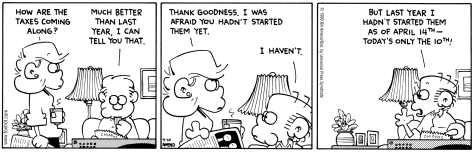
Was this you last year? Or the year before that? Regardless of when you actually file your return, we’ve long recommend preparing for tax season throughout the year to try and relieve some of the stress (see our post from 😮 almost 10 years ago below 🔽).

Here are 15 updated tips to get you prepped for tax season and to keep more money in your pocket. We’ve tried to arrange them in order for those Gen Zers who we still can’t believe are even old enough to be filing taxes. Guess that free trial ended – sorry y’all! And we know 15 is a long list but get used to it because you’re adulting now.

- Reduce taxable income by saving for retirement through an employer-sponsored plan.
As soon as you’re eligible (it varies from job to job), start making contributions to your retirement plan through your employer. YES, we mean you Gen Z kid that just started your first job out of high school or college. Even though retirement seems a lifetime away, it’s not only cheaper to start doing it now (you can get away with stashing $100/month and still potentially retire a millionaire) but you also end up having less federal income tax taken out of your check because you’re saving for retirement. Oh and there’s another benefit…
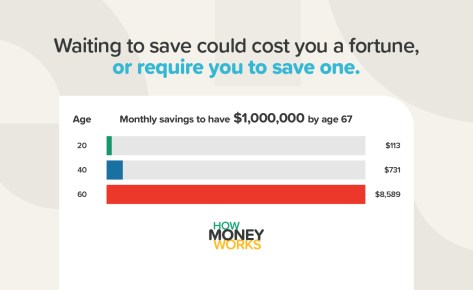
- Get paid to save for retirement with the Saver’s Credit based on contributions up to $2000.
Yes, you read that right! The IRS will actually credit you up to $1000 ($2000 if married filing jointly) if you’re saving for retirement.
Here’s how it works: be 18 or older, not a dependent and not a student. Save up to $2000 for retirement through your employer or your IRA (that’s an Individual Retirement Account) and based on your adjusted gross income (AGI) you could qualify for the max credit of $1000 or 50% of what you saved. You won’t see $1000 in the form of a refund but it will be subtracted from whatever your tax bill is. Don’t know what your AGI is or even where to find it? That’s something we need to talk about! - Take advantage of education credits.
Did you go back to school and eliminate yourself from being able to qualify for the Saver’s Credit we just mentioned? Don’t worry because there are education credits that you may be eligible for, namely, the American Opportunity Credit of up to $2,500 or the Lifetime Learning Credit that goes up to $2,000. The qualifications are different for each credit but regardless make sure to keep track of your expenses like tuition, enrollment fees, course-related books, supplies and equipment as both are based on how much you spent on these items. - Claim tax benefits for qualifying relatives.
Most people are aware that they can claim their children on their taxes. But did you know that if you are the primary provider for a parent or grandchild, you may qualify for additional tax benefits. It’s worth checking with your tax professional for the specifics on credits like the Child and Dependent Care Credit, so start adding up those expenses.

- Reduce out of pocket childcare costs if your employer offers dependent care benefits.
If you have a tax deduction, oh um a child, and your employer offers you dependent care benefits, make sure you’re using them. This allows you to pay for daycare and extended day services at school with pre-tax dollars. - Plan ahead for college expenses by saving with a 529 plan.
Concerned about paying for those children to go to college? Start saving now. This isn’t a tax deduction for your current return but the earnings made in the plan are exempt from income tax as long as those little buggers go to college and the money is used for those expenses. In some cases you can even use up to $10,000 a year without being taxed to send them to a private K-12 school. The plans vary from state to state so it’s best to check and see what’s available where you live. Not 100% sure that child is going to go to college? Ask your financial pro about UTMA/UGMAs. - Maximize HSA contribution to decrease taxable income.
Similar to the dependent care FSA mentioned in Part 1, health savings account contributions decrease the amount of taxes you pay in the year you make contributions. The trick is that HSAs aren’t available to everyone as they are meant for people with high deductible health insurance plans. However if you do have access to one, not only can you stash money pre-tax to cover your medical expenses like eyeglasses, prescriptions and doctor visits, but the account can earn interest and rolls over from year to year and from employer to employer.
If you don’t qualify for an HSA perhaps your employer provides access to a Medical FSA. You can elect how much to contribute from your pre-tax income and use the funds on medical expenses. Here’s where this account gets tricky. The funds are a use-it or lose-it deal so you need to be really good at estimating how much you’re going to spend in a calendar year or risk losing some cash. - Put your tax refund to work by paying off high interest debt, creating an emergency fund, or saving for retirement.
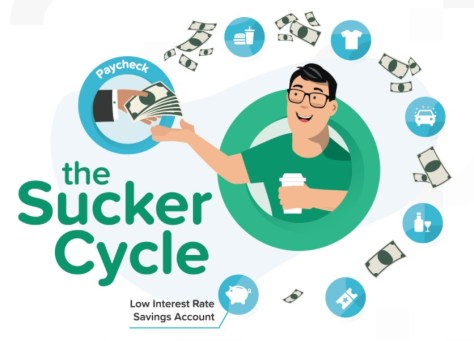
We see it year after year, a surge in used car sales and electronics purchases. But thankfully in this recent survey, most U.S. adults were planning to save their tax refund. The trick is to not save it in a low interest rate savings account like Clark below is doing. Thankfully it’s easier to find a higher interest rate savings account due to the Fed’s rate hikes this past year. Just make sure you’re taking advantage of it.
- Start saving for a down payment on a house.
Maybe you’ve already paid down your debt with past refunds, have an emergency fund and are a regular retirement saver. Is it your dream to own a home? Then apply your refund to that savings bucket. True the mortgage interest rates are starting to go down but that doesn’t mean you need to have less saved. Check out this post about the importance of the home price and the mortgage rate. - Take advantage of catch up retirement contributions if you’re 50+.
Didn’t start saving for retirement with that first job? While you might be behind in your savings you don’t have to stay that way. The limits on contributions range from $1000 to $3,500 higher if you’re 50 or older, depending on the account type. So find a way to minimize other expenses or stack up some cash gifts right now so you can max out your contributions. Remember that you have until the filing deadline to make contributions for 2023. - Consider the tax consequences before taking money out of your retirement account.
This one might not seem like something you need to be concerned about if you’ve already past retirement age. You might be thinking that since you’re past that 10% penalty age period it’s time to withdraw like crazy. Not so fast! If that money is coming out of a 401(k) or some other tax-deferred account the IRS wants their share now. And if you’re on Social Security pulling too much out in a year could also make your Social Security payments taxable. So make sure to have a chat with either your tax or financial professional before taking that money out. - Know which tax bracket you’re in.
As a follow up to the last step, keep track of which tax bracket you’re in. That can help you estimate how much tax will need to be withheld for any distributions from your retirement account regardless of if you’re past the point of the 10% penalty or not. Also it helps you more accurately estimate what tax may be due on additional funds you earn throughout the year from nontraditional employment or other sources. - Make estimated payments to avoid underpayment penalties.
Did you take our advice from our Divorce Your Job series or our posts on starting your own side hustle? Yes, we even mean you Uber drivers and Instacart shoppers. Well watch out for an increased tax liability since you’re now considered a business owner in the eyes of the IRS even though you may only think of it as a side gig. Make estimated tax payments throughout the year to avoid wasting money on penalties.

- Document your business expenses to lower tax liability including up to 100% of health insurance costs.
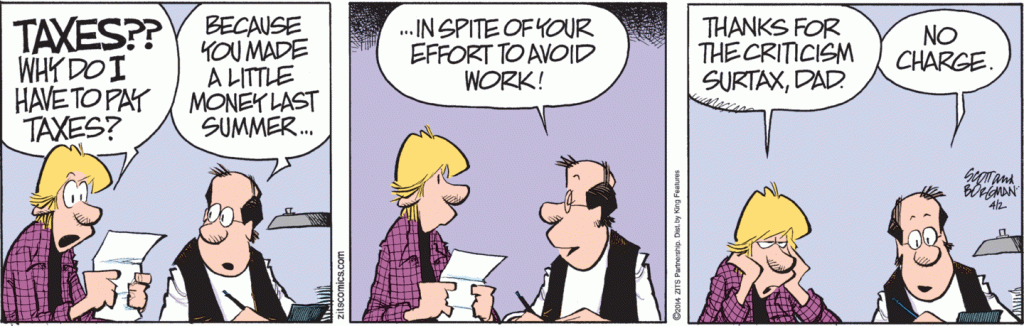
And we don’t mean document like in the comic above. Need tips on how to keep track of all of your business expenses? While Quicken is a software we’ve used in the past and Quickbooks is always a great go-to, maybe you’re not ready to learn a new program.
Join us on February 1st at 8:00 PM ET for our FREE, live Entrepreneurship class and ask about other tracking options. - Subcontract and deduct non-core administrative expenses.
Getting bogged down with administrative tasks instead of focusing on the key activities of your business? Hire somebody else to do it for you and deduct the cost from your taxes. You don’t have to file any tax paperwork until you reach $600 paid for services. The form that you’d end up filing is the 1099-NEC. Looking for a virtual assistant to handle calendar management, social media and other admin tasks for you? We’ll share a tip for that during the live class in February so make sure to mark your calendar or you can talk to us via our social media if you need the deets sooner.








 ECV Talks