Category Archives: Financial

Empowering Financial Resolutions for 2024

Charting a Path to Prosperity

In 2024, as we embark on a new year, it presents the perfect opportunity to transform your financial resolutions from mere aspirations into empowering steps toward achieving your dreams. The journey to financial fitness is not solely about numbers; it is about crafting a life filled with accomplishment, peace of mind, and long-term security.

You can make this year your most prosperous by setting clear goals, creating a comprehensive budget, exploring investment opportunities, and continuously educating yourself about personal finance. So, let’s embrace this exciting journey together and make every decision count for a brighter financial future! 

Resolution 1: Forge Your Financial Blueprint

Imagine a future where your finances support your day-to-day needs and fuel your wildest dreams and aspirations. It all starts by meticulously constructing a well-thought-out budget that aligns perfectly with your unique life goals, ensuring that every dollar is allocated purposefully and strategically.

In this financial utopia, you embrace the powerful philosophy of “paying yourself first” – a mindset that compels you to prioritize saving and investing, allowing your wealth to grow steadily over time. By consistently setting aside a portion of your income, you are actively building a solid foundation for long-term financial success.

To gauge your progress and stay on track, it is essential to calculate your net worth annually. This comprehensive evaluation provides:

  • A holistic view of your financial health.
  • Giving you insights into your assets and liabilities.
  • Overall progress toward achieving your financial goals.

Strategic planning becomes your secret weapon when confronted with significant expenses or future financial milestones. You can confidently navigate these milestones without derailing your economic well-being by proactively saving and investing in ways that align with your specific time horizons.

Safeguarding your living-expense money becomes paramount for those approaching retirement or already in their golden years. By adopting a conservative investment approach, you can protect your hard-earned savings while still generating a steady income to support your desired lifestyle during retirement.

Life is unpredictable, and that’s where the importance of an emergency fund becomes evident. Creating a safety net for life’s unexpected twists and turns offers you peace of mind and financial security, allowing you to weather any storm that comes your way without compromising your long-term financial goals.

So, picture this future where your finances are not just a means to an end but a powerful tool that propels you toward the life you’ve always envisioned. Start today by constructing a budget, embracing the philosophy of “paying yourself first,” calculating your net worth, planning for future expenses, safeguarding your retirement, and creating an emergency fund. With these proactive steps, you can transform your financial journey and make your dreams a reality.

Resolution 2: Master Your Debt

Debt can be a powerful financial tool if used wisely and managed effectively. By carefully working your debt load, you can ensure that life’s pleasures and necessities remain within reach without overwhelming yourself. One effective strategy is eliminating high-cost, non-deductible consumer debt, allowing you to allocate your resources more efficiently. Another approach is to align your repayment terms with your life’s timeline, enabling you to balance your financial obligations with your long-term goals.

Additionally, it is worth considering the benefits of refinancing or consolidating debt, which can help optimize your repayment strategy and potentially reduce the overall cost of debt. By taking these proactive steps, you can leverage the potential of debt while maintaining a healthy financial outlook.

Resolution 3: Cultivate Your Investment Garden

Ensure the prosperity of your investments by prioritizing a well-rounded and diversified portfolio. By diversifying across various asset classes and within them, you can effectively minimize risk while maximizing your growth potential.

Additionally, it is essential to remember the impact of taxes when allocating your assets. To maintain alignment with your goals and adapt to life changes, make it a habit to monitor and rebalance your portfolio regularly. This diligent approach will help you navigate the ever-changing investment landscape with confidence.

Resolution 4: Safeguard Against the Unknown

Life is full of unexpected twists and turns, but being prepared can make all the difference. Take proactive steps to protect yourself and your loved ones by investing in comprehensive insurance plans covering various life aspects. Consider health insurance for medical expenses, life insurance for financial security, disability insurance for income protection, property insurance for safeguarding your assets, and liability insurance for unforeseen circumstances.

Additionally, don’t overlook the significance of long-term care insurance to ensure you have the necessary support in your golden years. Lastly, create a well-thought-out disaster plan to safeguard your assets and provide peace of mind. Taking these precautions allows you to navigate life’s uncertainties with confidence and security.

Resolution 5: Preserve Your Legacy

An estate plan is not just a legal document; it’s your heartfelt love letter to the future. It ensures that your hard-earned assets and beloved dependents are taken care of exactly as you desire. To maintain the effectiveness of your estate plan, it is crucial to review and update beneficiary designations and your will regularly.

Additionally, coordinating asset titling with your estate plan can help streamline the distribution process. In more complex situations, establishing trust may be warranted to provide added protection and flexibility. Lastly, it is crucial to ensure that your estate documents are easily accessible to trusted individuals who can carry out your wishes with confidence and care.

In 2024, seize the opportunity to build a brighter financial future. This year is not just a simple milestone; it’s a chance to embark on a transformative journey toward abundance and peace of mind. Embrace these resolutions as your stepping stones, each one paving the way to a life filled with financial prosperity and the realization of your dreams.

Remember, taking them one at a time will allow you to witness the remarkable transformation of your financial health, bringing you closer than ever to the life you’ve always envisioned.


Don’t Wait Until the Last Minute: 2024 Tax Filing Season is Coming

Was this you last year? Or the year before that? Regardless of when you actually file your return, we’ve long recommend preparing for tax season throughout the year to try and relieve some of the stress (see our post from 😮 almost 10 years ago below 🔽).

Here are 15 updated tips to get you prepped for tax season and to keep more money in your pocket. We’ve tried to arrange them in order for those Gen Zers who we still can’t believe are even old enough to be filing taxes. Guess that free trial ended – sorry y’all! And we know 15 is a long list but get used to it because you’re adulting now.

  1. Reduce taxable income by saving for retirement through an employer-sponsored plan.
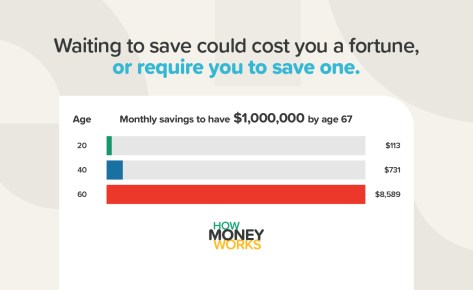
    As soon as you’re eligible (it varies from job to job), start making contributions to your retirement plan through your employer. YES, we mean you Gen Z kid that just started your first job out of high school or college. Even though retirement seems a lifetime away, it’s not only cheaper to start doing it now (you can get away with stashing $100/month and still potentially retire a millionaire) but you also end up having less federal income tax taken out of your check because you’re saving for retirement. Oh and there’s another benefit…
  1. Get paid to save for retirement with the Saver’s Credit based on contributions up to $2000.
    Yes, you read that right! The IRS will actually credit you up to $1000 ($2000 if married filing jointly) if you’re saving for retirement.
    Here’s how it works: be 18 or older, not a dependent and not a student. Save up to $2000 for retirement through your employer or your IRA (that’s an Individual Retirement Account) and based on your adjusted gross income (AGI) you could qualify for the max credit of $1000 or 50% of what you saved. You won’t see $1000 in the form of a refund but it will be subtracted from whatever your tax bill is. Don’t know what your AGI is or even where to find it? That’s something we need to talk about!
  2. Take advantage of education credits.
    Did you go back to school and eliminate yourself from being able to qualify for the Saver’s Credit we just mentioned? Don’t worry because there are education credits that you may be eligible for, namely, the American Opportunity Credit of up to $2,500 or the Lifetime Learning Credit that goes up to $2,000. The qualifications are different for each credit but regardless make sure to keep track of your expenses like tuition, enrollment fees, course-related books, supplies and equipment as both are based on how much you spent on these items.
  3. Claim tax benefits for qualifying relatives.
    Most people are aware that they can claim their children on their taxes. But did you know that if you are the primary provider for a parent or grandchild, you may qualify for additional tax benefits. It’s worth checking with your tax professional for the specifics on credits like the Child and Dependent Care Credit, so start adding up those expenses.
  1. Reduce out of pocket childcare costs if your employer offers dependent care benefits.
    If you have a tax deduction, oh um a child, and your employer offers you dependent care benefits, make sure you’re using them. This allows you to pay for daycare and extended day services at school with pre-tax dollars.
  2. Plan ahead for college expenses by saving with a 529 plan.
    Concerned about paying for those children to go to college? Start saving now. This isn’t a tax deduction for your current return but the earnings made in the plan are exempt from income tax as long as those little buggers go to college and the money is used for those expenses. In some cases you can even use up to $10,000 a year without being taxed to send them to a private K-12 school. The plans vary from state to state so it’s best to check and see what’s available where you live. Not 100% sure that child is going to go to college? Ask your financial pro about UTMA/UGMAs.
  3. Maximize HSA contribution to decrease taxable income.
    Similar to the dependent care FSA mentioned in Part 1, health savings account contributions decrease the amount of taxes you pay in the year you make contributions. The trick is that HSAs aren’t available to everyone as they are meant for people with high deductible health insurance plans. However if you do have access to one, not only can you stash money pre-tax to cover your medical expenses like eyeglasses, prescriptions and doctor visits, but the account can earn interest and rolls over from year to year and from employer to employer.
    If you don’t qualify for an HSA perhaps your employer provides access to a Medical FSA. You can elect how much to contribute from your pre-tax income and use the funds on medical expenses. Here’s where this account gets tricky. The funds are a use-it or lose-it deal so you need to be really good at estimating how much you’re going to spend in a calendar year or risk losing some cash.
  4. Put your tax refund to work by paying off high interest debt, creating an emergency fund, or saving for retirement.
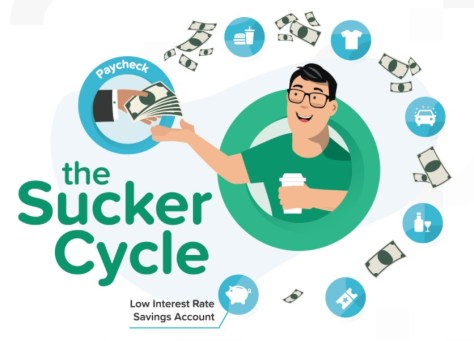
    We see it year after year, a surge in used car sales and electronics purchases. But thankfully in this recent survey, most U.S. adults were planning to save their tax refund. The trick is to not save it in a low interest rate savings account like Clark below is doing. Thankfully it’s easier to find a higher interest rate savings account due to the Fed’s rate hikes this past year. Just make sure you’re taking advantage of it.
  1. Start saving for a down payment on a house.
    Maybe you’ve already paid down your debt with past refunds, have an emergency fund and are a regular retirement saver. Is it your dream to own a home? Then apply your refund to that savings bucket. True the mortgage interest rates are starting to go down but that doesn’t mean you need to have less saved. Check out this post about the importance of the home price and the mortgage rate.
  2. Take advantage of catch up retirement contributions if you’re 50+.
    Didn’t start saving for retirement with that first job? While you might be behind in your savings you don’t have to stay that way. The limits on contributions range from $1000 to $3,500 higher if you’re 50 or older, depending on the account type. So find a way to minimize other expenses or stack up some cash gifts right now so you can max out your contributions. Remember that you have until the filing deadline to make contributions for 2023.
  3. Consider the tax consequences before taking money out of your retirement account.
    This one might not seem like something you need to be concerned about if you’ve already past retirement age. You might be thinking that since you’re past that 10% penalty age period it’s time to withdraw like crazy. Not so fast! If that money is coming out of a 401(k) or some other tax-deferred account the IRS wants their share now. And if you’re on Social Security pulling too much out in a year could also make your Social Security payments taxable. So make sure to have a chat with either your tax or financial professional before taking that money out.
  4. Know which tax bracket you’re in.
    As a follow up to the last step, keep track of which tax bracket you’re in. That can help you estimate how much tax will need to be withheld for any distributions from your retirement account regardless of if you’re past the point of the 10% penalty or not. Also it helps you more accurately estimate what tax may be due on additional funds you earn throughout the year from nontraditional employment or other sources.
  5. Make estimated payments to avoid underpayment penalties.
    Did you take our advice from our Divorce Your Job series or our posts on starting your own side hustle? Yes, we even mean you Uber drivers and Instacart shoppers. Well watch out for an increased tax liability since you’re now considered a business owner in the eyes of the IRS even though you may only think of it as a side gig. Make estimated tax payments throughout the year to avoid wasting money on penalties.
cartoon about taxes
  1. Document your business expenses to lower tax liability including up to 100% of health insurance costs.
    And we don’t mean document like in the comic above. Need tips on how to keep track of all of your business expenses? While Quicken is a software we’ve used in the past and Quickbooks is always a great go-to, maybe you’re not ready to learn a new program.
    Join us on February 1st at 8:00 PM ET for our FREE, live Entrepreneurship class and ask about other tracking options.
  2. Subcontract and deduct non-core administrative expenses.
    Getting bogged down with administrative tasks instead of focusing on the key activities of your business? Hire somebody else to do it for you and deduct the cost from your taxes. You don’t have to file any tax paperwork until you reach $600 paid for services. The form that you’d end up filing is the 1099-NEC. Looking for a virtual assistant to handle calendar management, social media and other admin tasks for you? We’ll share a tip for that during the live class in February so make sure to mark your calendar or you can talk to us via our social media if you need the deets sooner.

Start the Year Right: 4 Tips for Financial Wellness in 2024

As one year transitions into another, we always see a sudden rush to get or start getting your financial house in order. A lot of bulleted or numbered lists come out of things to do without necessarily explaining why you need to do it. Maybe the assumption is that you already know which begs the question if you did know, wouldn’t your finances already be in order?

The reality is that many people who live in the US are not financially literate or put another way they don’t fully understand the language of money. That lack of understanding is what leads to having a financial mess on your hands. Let’s be clear though – IT’S NOT THEIR FAULT!

Nowhere in the education system of this country is financial literacy CONSISTENTLY taught. As a former public school educator that had a previous career in finance Ms. ME found it particularly amusing that sometimes the courses that were offered were taught by individuals who lacked financial know-how themselves. This glaring absence of competent & consistent education leads to almost half of the population not knowing things that are key to keeping your bank accounts and overall finances in the black.

howmoneyworks.com/marieedwards/challenge

Think we’re kidding? Take the quiz on the website above and then post your score in the comments below if you’re brave. Are you financially literate?

If you get a score that you feel is too low to post, here’s how you change it. Register for this free course happening January 4th at 8 PM EST and increase your financial literacy in record time!

Well regardless of what score you get we’re going to give you our bulleted list and the reasons for each. But at the end of the day it’s on you to take the actions we suggest or risk another year in the same financial state or a worse one.

steps leading to financial wellness

4 Steps to Financial Wellness

1 – Know your current situation

Does your doctor diagnose you without first giving you an examination? Of course not! The same goes for the financial pro you work with; they can’t give you a prescription for financial wellness without knowing where you are right now. To do that, YOU have to take an honest look at where you are right now. How much do you earn in a month? How much does it cost for you (and your family) to exist from month to month? Where is your money currently going? Knowing those things are key to either taking the next steps yourself or working with your financial pro on the next steps.

2 – Eliminate the unnecessary

This one is often difficult because here in the US advertising has convinced so many that they need everything they see to be happy. You really have to step back and determine what actually is a need versus a want. Does that mean you can’t have any wants? ABSOLUTELY NOT!! But sometimes you end up wanting something to, as that old saying goes, keep up with the Joneses instead of satisfying some intrinsic desire. Buying things to impress people you don’t like or who don’t contribute positively to your life should not be something you continue to do. So cut it out!

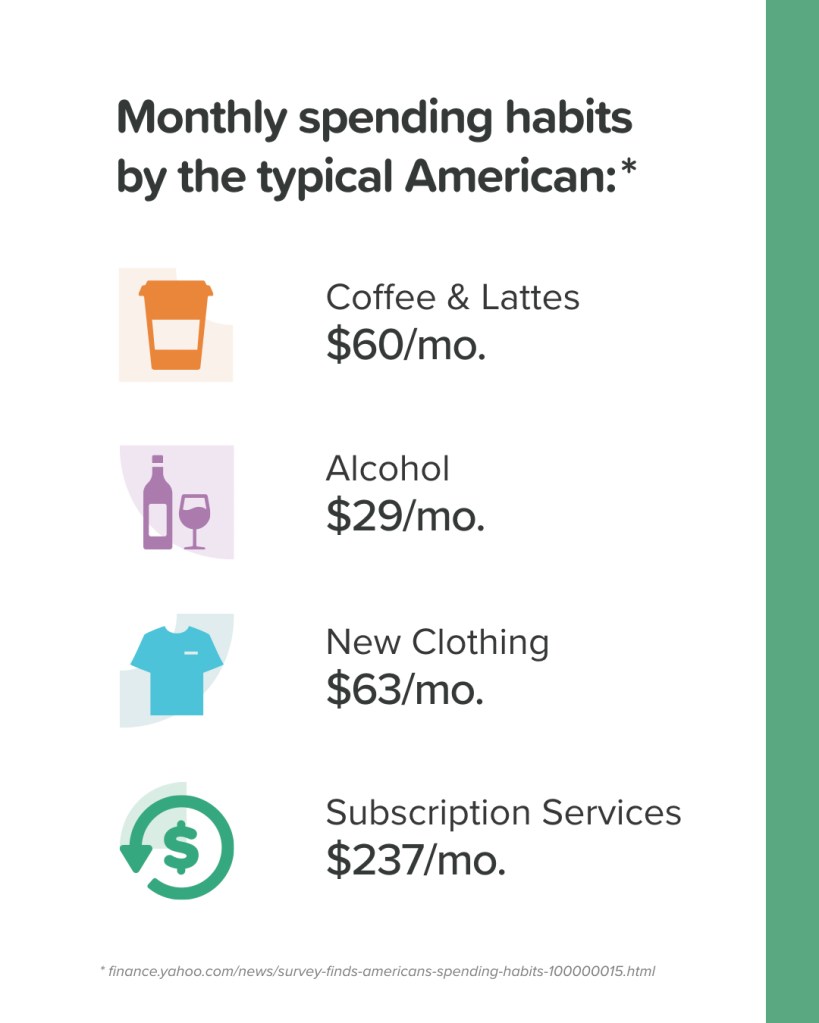
Then start looking at other ways you might be spending more than you have to like on overpriced bill that you haven’t price-shopped in a while like internet or insurance. Or perhaps you have some of the habits below that you’d like to adjust or eliminate entirely.

3 – Set some goals

We all want things but often don’t think about those wants any further out than one to three years. That short-term thinking does not add up to financial wellness. It’s great to have short-term goals but make sure they are realistic. If you have no savings, buying a home is more of a mid or long term goal, not a short-term one. So after completing the first two steps, write out what you want and then put some timeframes beside them. Here’s a guide to help group those wants:

4 – Make a plan

    The last step is to make a plan to reach those goals. Making the plan ranges in complexity based on how many goals you have. But the even harder part for many is following the plan. If you need help with this or any of the previous steps, don’t forget to come to the FREE live class on January 4, 2024 at 8 PM ET. We’ll be sharing a free tool to help with one or more of the steps and introducing our community to find help when you need it.

    5 THINGS TO CONSIDER WHEN STARTING YOUR OWN BUSINESS

    Does anything sound better than being your own boss?

    Well, maybe a brand new sports car or free ice cream for life. But even a state-of-the-art fully-decked-out sports car will eventually need routine maintenance, and the taste of mint chocolate chip can get old after a while.

    The same kinds of things can happen when you start your own business. There are many details to consider and seemingly endless tasks to keep organized after the initial excitement of being your own boss and keeping your own hours has faded. Circumstances are bound to arise that no one ever prepared you for!

    Although this list is not exhaustive, here are 5 things to get you started when creating a business of your own:

    1. Startup cost

    The startup cost of your business depends heavily on the type of business you want to have. To estimate the startup cost, make a list of anything and everything you’ll need to finance in the first 6 months. Then take each expense and ask:

    • Is this cost fixed or variable?
    • Essential or optional?
    • One-time or recurring?

    Once you’ve determined the frequency and necessity of each cost for the first 6 months, add it all together. Then you’ll have a ballpark idea of what your startup costs might be.

    (Hint: Don’t forget to add a line item for those unplanned, miscellaneous expenses!)

    2. Competitors

    “Find a need, and fill it” is general advice for starting a successful business. But if the need is apparent, how many other businesses will be going after the same space to fill? And how do you create a business that can compete? After all, keeping your doors open and your business frequented is priority #1.

    The simplest and most effective solution? Be great at what you do. Take the time to learn your business and the need you’re trying to fill – inside and out. Take a step back and think like a customer. Try to imagine how your competitors are failing at meeting customers’ needs. What can you do to solve those issues? Overcoming these hurdles can’t guarantee that your doors will stay open, but your knowledge, talent, and work ethic can set you apart from competitors from the start. This is what builds life-long relationships with customers – the kind of customers that will follow you wherever your business goes.

    (Hint: The cost of your product or service should not be the main differentiator from your competition.)

    3. Customer acquisition

    The key to acquiring customers goes back to the need you’re trying to fill by running your business. If the demand for your product is high, customer acquisition may be easier. And there are always methods to bring in more. First and foremost, be aware of your brand and what your business offers. This will make identifying your target audience more accurate. Then market to them with a varied strategy on multiple fronts: content, email, and social media; search engine optimization; effective copywriting; and the use of analytics.

    (Hint: The amount of money you spend on marketing – e.g., Google & Facebook ads – is not as important as who you are targeting.)

    4. Building product inventory

    This step points directly back to your startup cost. At the beginning, do as much research as you can, then stock your literal (or virtual) shelves with a bit of everything feasible you think your target audience may want or need. Track which products (or services) customers are gravitating towards – what items in your inventory disappear the most quickly? What services in your repertoire are the most requested? After a few weeks or months you’ll have real data to analyse. Then always keep the bestsellers on hand, followed closely by seasonal offerings. And don’t forget to consider making a couple of out-of-the-ordinary offerings available, just in case. Don’t underestimate the power of trying new things from time to time; you never know what could turn into a success!

    (Hint: Try to let go of what your favorite items or services might be, if customers are not biting.)

    5. Compliance with legal standards

    Depending on what type of business you’re in, there may be standards and regulations that you must adhere to. For example, hiring employees falls under the jurisdiction of the Department of Labor and Federal Employment Laws. There are also State Labor Laws to consider.

    (Hint: Be absolutely sure to do your research on the legal matters that can arise when beginning your own business. Not many judges are very accepting of “But, Your Honor, I didn’t know that was illegal!”)

    Starting your own business is not an impossible task, especially when you’re prepared. Get a jumpstart on your preparation at our free class tomorrow, Sunday, August 22nd at 4 PM EST (UTC -5). Save your seat!

    Find out how to transition from employee 2 Entrepreneur

    *Registration is required. Your information will not be sold or shared. You will only receive invitations to future iterations of this and our other Entrepreneurship classes.

    Habits of the Wealthy – Part 3

    The Wealthy prioritize Passive Income

    It’s simple—the wealthy prioritize passive income because it saves time.

    That’s because passive income streams don’t require constant time and effort to maintain. Once they’re up and running, they require minimal maintenance to keep earning.

    Let’s consider a hypothetical example…

    Sarah and Jim are coworkers and friends. Jim is content to work from 9 to 5, five days a week, in exchange for his paycheck. He trades about half of his waking hours for his income.

    Sarah, however, is more ambitious. She wants a more effective way to create additional cash flow.

    So, she starts a business selling crafts online. At first, it’s a lot of extra work—she creates the products, makes the listings, runs ad campaigns, and even ships the items herself. But she’s creative and motivated, and her business grows.

    It doesn’t take long before she earns enough from her business to hire an employee to help with the marketing and shipping. She can focus on what she loves—making the crafts!

    But that extra pair of hands increases her productivity even further. Now, she can hire another employee to actually make her crafts.

    Suddenly, Sarah is almost totally uninvolved in her business beyond high level decision making. In addition to her day job, it’s become a source of income that requires minimum upkeep. And she still has time every evening for her family and opening up new passive income streams!

    The takeaway? The sooner you can create viable sources of passive income, the better! It comes down to matching your effort to your reward. It’s a chance to create impressive returns over the long-term for an upfront investment of time, money, and energy.

    If you’re interested in opportunities to create additional income streams, check out some of our past posts on the topic.

    • Side Hustle expansion

    • Passive Income: How It Works

    • How to Build a Business that Lasts

    For a one-on one discussion about potential ways for you to create passive income, contact us!